Do you remember your favorite book from childhood?
Time: Year Nine
Place: Cairo, local state girls’ school
Class: Arabic
As far I can remember, a different Arabic Story was included in our curriculum every year.
I can mainly remember that book, though I’m not actually sure whether it was in year eight or nine.
Anyway the story was somehow historical, the kind of heroic epic with a gentle tug of innocent romance. They used to say that it was adapted from a real story.
That’s the first reason I still remember it.
As for the other reason… I’ll reveal later.
Just keep reading.
The story took place centuries ago in a small city near Alexandria. Though it was only a small city, its people, old and young, men and women, were among the bravest in all of Egypt. They had taken part in a heroic battle and made a memorial contribution to defeating and expelling the french invaders from Egyptian lands.
And so… this once -upon -a -time story unfolded during the Napoleonic Invasion of Egypt.
Within its historical, epical context, the book weaves the tale of one of the prettiest young women and one of the bravest young men in that small city.
They were cousins, deeply attached to one another, but each with a different dream.
She listened to the fortune -teller and believed she was destined to become a queen.
He listened to the cries of his country, the enemy invasion, and the duty to free his homeland.
She married the chef leader of Napoleon campaign and travelled to France, but she never became a queen.
He worked hard, fought for his country, and married an English girl who believed in his cause.
She returned defeated and humiliated.
He stayed, died, and was buried as a martyr and loyal man to the very end.
The end.
Isn’t it a memorable story.
Now, here’s the second reason which is a bit funny, and that’s why I remember it.
Isn’t memory selective?
Yes it is, and it always seems to swing between two extremes: the happy and the awful.
So then… here’s the fun bit.
During one of the classes, while the teacher was in the middle of explaining the historical events, a girl raised her hand to ask a question.
Strange how I still remember that girl, but not her name. Perhaps it’s because she was the tallest in the class.
The girl was leaning against the wall when, out of the blue, she threw her question into the room: What was the age difference between Zubaida (the pretty heroine) and Laura (the English girl)?
Our Arabic teacher turned and gave the girl one of those blazing looks that made the whole class freeze.
“Out of all the sensible questions we’re practising, you came up with the one that doesn’t relate. Why would you ever care about their age?”
The poor girl flushed, straightened in her seat, opened her book and flipped to a random page.
That was so funny how the poor girl, instead of keeping her dreamy question to herself, voiced it out loud.
Even now, I still can’t help laughing.
And that’s all about my memorable book.
Though it wasn’t exactly part of my childhood, my teen years will do.
otherwise she will be hooked out of her world; her big, secure home.
And then it’s over.
She will serve as a fresh dinner plat for a hungry stomach.
“You definitely, and by all means, shouldn’t open it,” the old wise fish advised her fellows.
“As delicious, fresh, and rare as the bait may be, it is as dangerous, cunning, and deceptive. You should remember that, and think twice,” the old wise fish warned.
We humans should think not only twice but thrice or even more before stepping into a zone that isn’t ours.
Whatever this zone may be;
social, professional, or even familial.
It isn’t advisable to open your mouth and swallow everything,
nor to open your mouth and pour everything out.
In both cases, you transgress your zone and fall into waters that aren’t yours; whether deep or shallow it doesn’t matter, again they’re not yours.
You sacrifice your self-respect, your peace of mind, and your time over trivialities.
Didn’t the old man repeatedly give this piece of advice?
Of course he did.
Psychologists , psychiatrists, and many books say and repeat the very same advice.
If you don’t trust humans because they’re the ones who invented fishing rods, then trust the old wise fish who has never transgressed its own territory.
By the way this post was inspired by a quote I wrote on my other blog; the one I’m trying to bring it back to life. If you’d like to read it, here’s the link:
This is the dentophobia; the fear of dentist visit.
Of course, I made this word up, but feel free to use it… just add me as the reference. Who knows, perhaps one day this word will be added into the encyclopaedia of odd words.
So… this is the main fear I believe most people have.
It’s the dentist, and the dental clinic.
How many times have you postponed your visit to this white, bright, ’healthy teeth guaranteed’ clinic?
Mine are Numerous.
The thing is most of the dentists look nice, talk nice, behave nice, but when their equipment, tools and shiny new technology start buzzing, nothing looks nice anymore. And that’s exactly when the first phase of fear begins.
So… once you lie down on that dental chair, your heart starts pounding hard and loud and nonstop
Then comes the eye shield, and with it your hands begin to perspire and tremble.
What follows, is opening your mouth wide, and that’s exactly when your heart almost forgets how to beat.
’Sorry, do you want me to stop? Just a few seconds more,’ your faithful dentist assures.
And your only response is to close your eyes and clutch your hands.
What else can you do?
Finally, you hear the long awaited phrase: ’All done’
You got to your feet, and thank the Lord you can leave safe and sound.
Then the second phase begins, as your kind dentist offers some warnings wrapped in gentle advice; ’Don’t speak, eat, or drink for at least two hours if not longer. And in case of any problems, call the clinic immediately.’
You listen and nod, your mouth numb and your head aching.
Last but not least, the final wave of fear arrives when you see that smiling face behind the reception desk waiting for the bill to be payed and the next appointment to be booked.
Later on you arrive home and, all of a sudden, you start craving a cup of tea. But then you remember you can’t drink.
So you gaze around the kitchen, looking for any snack, and again you remember you can’t eat.
A moment later, you phone rings, but you don’t answer it, because your ears are buzzing and your mouth is numbing.
Nothing is left but to try to relax somewhere quiet. You do, and with the mercy of God, you fall asleep.
’Congratulations… you’ve passed your dentophobia challenge with great success,’ you whisper in your dream.
And that’s when you finally realise you’ve conquered one of your fears.
As I was teaching my daughter her Arabic lesson, we came across the story of The Shepherd and The Wolf. She already knew the story, but this time were using it mainly for learning some basic grammar.
Before we started our lesson, I asked her if she remembered the story.
‘I think so,’ she replied.
‘Brilliant. So what is it about?’
‘Little Red Riding Hood,’ she said and added a few others as options, none of them related to the one I’d asked about.
I couldn’t help laughing at these multiple choice answers that this young generation seems to master so well.
Now… it’s your turn.
Have you or your children heard of this story before?
If not, here it is:
Once upon a time, a young Shepherd was getting bored of his daily routine with the sheep. Everyone had the same chores to do and finish before the sun went down. They would wave hi and bye, and then hurry off to tend for their duties.
Day after day, the level of the Shepherd’s boredom exceeded the limits.
Then one day, he came up with a silver idea, the one that would stir a bit of hustle and bustle in the small village.
That day, the Shepherd waited until the noon sun was shinning everywhere. He ran all the way to the top of the mountain and looked down at the people enjoying their noon meal. Then, he screamed and screamed and screamed.
‘The wolf is attacking my sheep. Help. Help!’ he yelled and yelled and yelled.
The people, old and young, men and women, left their chores, abandoned their meal, and ran up the hill all the way to rescue him.
Slippers, old shoes, sticks, pans, pots, and knives were their weapons.
Breathless and exhausted, they reached the spot where the boy stood,
but there was no wolf, and the sheep were calm and happily grazing around.
The young shepherd apologised and explained how terrified he’d felt, hearing swishing and swooshing around, and thinking it must be a wolf.
The villagers sighed in relief and left the boy in peace.
Excited, the boy repeated the same show three times, each one with a different lie.
But the fourth time, the fake story became a real one.
A real wolf appeared, ready to play its role for a real drama.
The boy screamed nonstop,
His screams were earnest. ‘Help. Help. Please Help. The wolf is eating my sheep.’
But this time, his show didn’t win any audience.
The wolf grinned and hunted more and more.
The boy’s voice broke, and he could scream no more.
He finally realised that no one trusted him any more.
Wouldn’t it have been better if the young Shepherd had thought of some other exciting way to break his boredom without lying.
At the end of the day, even if some people smile and clap for the lair, they will neither trust nor respect them.
I didn’t think I was going to write anything today until I randomly opened one of my old notebooks. Actually.. I was searching for a blank page to write down something before it slipped from my memory.
And then the miracle happened.
My eyes caught a quote from a book, and my brain insisted on giving it some workout.
By the way, do you also have this habit of saving the quote but neither the author’s name nor the book it came from?
Just curious to know whether I’m the only person who does this.
Anyway, this is the quote: “To know a river, you have to know its source.”
So, according to my humble interpretation: to befriend a river, to communicate with it, and certainly to understand it, you have to know its source; how it flows, what kind of life it carries, and when it floods or dries.
Simply put, you have to know where it began, how it lived, and what shaped it.
Don’t you agree that some people are just like rivers.
You can’t truly know them until you know their sources; their history, their nature, their way of life, and certainly the reasons behind their tides.
I think I once wrote a post about that journey, but I can’t remember which one.
Anyway, as hard as this trip was, it somehow turned out to be just as funny.
I think it was in 2005 when we took a flight to Egypt to leave my two little boys with family. I smile now as I write this post, but back then I wept buckets as we headed to Cairo Airport to take our flight to Saudi Arabia.
In this holy place, there is no place for brands or for showing off.
I wore a white cotton dress, a white hijab, and simple slippers, just like most of the women.
By the way, women are allowed to wear any colour but I preferred white.
Simple and modest, women put on their clean dresses and hijabs out of obedience and respect for the holy rituals. No one would criticise or even think about the quality or the brand of anyone else’s clothes.
Isn’t this a beautiful picture to be part of and a beautiful memory to treasure.
I reckon no one would believe that my husband and I didn’t take any photos during this trip.
Honestly, we didn’t.
Simply because, back then, phones were not allowed inside the holy mosque.
So no one would have taken photos to show what they were wearing, how they were praying, or how they were feeling.
Even outside, around the other sights, we didn’t bother taking pictures.
We lived precious moments that carved themselves deeply into our memories for years, and that’s more authentic than any captured photo.
Phew… it took almost five months to pick a fictional book again.
I really enjoyed reading non- fiction over the last few months.
It wasn’t until yesterday that my brain started begging for a break, a pause from working on those complicated terms and scientific writings.
When I didn’t show any sign of objection, my brain seized the opportunity and explained that he was in dire need of breathing some literary prose, some metaphors, similes and idioms.
I took a few sips of water, and he sighed deeply before continuing his complaint about how bored sick he felt reading those black- and-white paragraphs. He longed for… imagination with its colours, rhythms, and intrigues.
Request approved, I said.
And finally, I whispered to myself, feeling over the moon.
It was last night when I picked up an old fictional book.
Oh, the poor book has been waiting patiently for that exact moment.
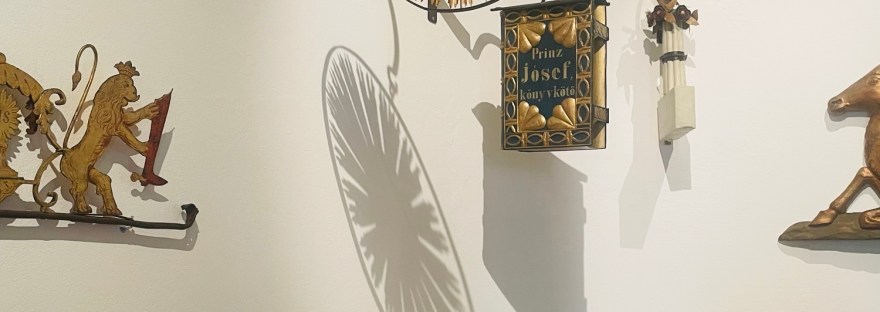
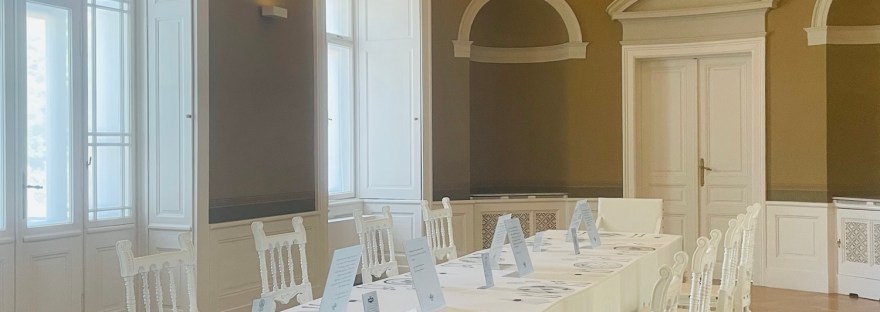
Actually I’m not sure this was a royal table, but let’s say it once belonged to a Hungarian noble, a piece of his past that somehow moved to another’s person’s villa.
Why do you think that might be?
Because the owner of the villa had gone bankrupt, and his villa turned into a museum. Some treasured Hungarian pieces were moved there, including the table.
Thanks to one of the museum staff, I knew about this story.
Hopefully, I got it right.
As for other information, my daughter and I had to rely on our own brains to put bits and pieces together, since everything was in German.
And you may know by now that my German is just like my Italian- two languages I never once considered learning. No idea why.
So back to the royal table. Isn’t it beautiful?
As in most museums, visitors aren’t allowed to touch any of pieces, but they can take photos.
How I wished I could pull up a chair and enjoy a nice cup of tea there.
But since that wasn’t allowed, I simply imagined it.
Those old china cups and plates, a traditional cake with natural flavours and simple ingredients.
I wouldn’t have minded wearing one of those dresses on display either. They were long, elegant, and even had a hair cover. It would have been fun.
I couldn’t imagine other guests in the scene, though.
It would have been so embarrassing as they would all be speaking German, and I’d be sitting there with nothing but a completely useless smile.
It was an enjoyable visit.
And what made it even more enjoyable was the experience of communicating with people who don’t understand your language just as much you don’t understand theirs.
But we laughed together, and somehow managed to sort the whole visit perfectly.
Imagine the portions you eat at home and the ones you eat out.
No comparison.
Not because the food you eat at home is less,
but because what you eat at home can be plenty, and for far less expenses.
You actually pay far too much at restaurants.
Of course, the food may taste nicer and look fantastic.
And yes, you feel relieved and relaxed,
for you don’t have the burden of preparing, cooking and cleaning.
Still, your mind can’t help doing the math.
Everything has a double price hidden behind the smile and warm welcome of the catering staff.
On one of those few precious warm April days, we went to for lunch outside.
Everything looked nice and clean, and the location of the restaurant was really nice.
My daughter ordered pizza, which I believe was a good, money wise choice.
My husband and I were craving fish.
The plat we both liked offered a variety of fish; prawns, cod, salmon, oysters, smocked sardine, along with vegetables in a cream sauce and some bread.
Isn’t it mouthwatering?
I suggested that we can share the plat.
My husband agreed, though doubted it would enough and thought it might be a good idea to have a side or two.
I insisted it would be fine since I’m not much of an eater.
My husband nodded, but added two sides anyways, just in case
I surrendered.
Our order arrived with a divine aroma and a fantastic presentation.
But then the real fun began.
The plat turned out to be a big bowl, full of creamy sauce that looked like a wide white sea with tiny, different kinds of fish.
I grabbed my fork and imagined it was my fishing rod. It was easy to catch those tiny swimming portions, really easy.
They tasted yummy, but in a blink our Bismillah and Alhamdulilaah ( our food blessings) were done, and every tiny piece had disappeared.
If it weren’t for the two sides and the leftovers from my daughter’s pizza, we would have been starving.
It’s funny to share a plat, but only if you’ve ordered plenty of sides.
Otherwise, you’re better off saving your money and eating at home.
In my culture, when something breaks, burns, or gets damaged in any way, people usually say, “Thank God, it took the evil eye away.”
Funny how my grandfather, many years ago, used to laugh and say “Doesn’t this evil eye go anywhere else? It had almost broken all of the cups.”
Actually, I follow the tradition.
I never wept over spilled milk or a broken cup.
I repeat the same phrase and feel relieved.
I thank God that the damage was in things that can be replaced, not any one of us.
What disturb me and what I make a fuss about is the mess. That’s when I start yelling at everyone around me to be careful, to watch out, and definitely to be safe.
By the way, I didn’t break anything today, but I did have some funny, slightly annoying moments.
So… instead of making a nice, fresh orange juice, the machine grew grumpy and violent. It started shaking as if it were going to explode, splashing juice everywhere including me. Of course, I unplugged it, but then I hit the cup, and a river of juice came flooding across the counter.
After cleaning the mess, I went to have some fresh water before heading out. But for some reason, the glass didn’t feel comfortable on the mat and decided to lay down for a bit. Then, again, another river flooded the table, and headed straight towards both my phone and iPad. No way, I gasped, snatching my precious devices just before the flood reached them.
Then I went out, happy with the sun, the blue sky, and the steps I was taking until the wind decided to make another mess. Not with rain, but by blowing pollen everywhere.
I came back with a headache, itchy eyes, and a blocked nose.
Could it be another evil eye?
No, it is the spring evil.
Let me introduce the most unwelcome visitor: Mr. Spring Hay Fever.
So… here I’m again, repeating the same story that started at the beginning of this year.
It’s about my determination to read more non-fiction than fiction.
So far, I’ve been reading non-fiction about different topics and I’m really enjoying them.
It wasn’t until a few days ago that I started reading Of Men and Plants by Maurice Messegue. From its very beginning, the book turned out to be the story of the author himself, who was apparently a very famous herbalist.
I’ve really enjoyed every part of his story so far.
But… have you ever tried to put into practice some of the knowledge you read about?
Well… I tried, but of course not as a herbalist.
What happened is that I started looking around at different plants, not just the familiar ones I know and use regularly.
To my surprise, I discovered there’s rosemary in my garden, but there are other plants that look totally unfamiliar.
I used Google search, and it gives some information but with a few warnings, as if I am going to eat them.
I’m really thinking about asking my neighbours.
Wouldn’t that be a good idea.
Anyway, ever since I started reading about herbs, my instagram feed has been full of herbalists and herbs.
Can it be a coincidence?
Or did everyone become suddenly interested in herbs.
Sometimes, I feel as if I am not just looking at the herbs, but I’m almost smelling them.
Could this actually happen in the future?
Please no.
There’s already enough madness on social media.
But in the reels, nothing seems toxic or dangerous. Even the dandelion, that cute little yellow flower, I’ve been known for years as a weed, turns out to be nutritious and full of health benefits.
Sometimes, I wonder why they never taught us about different herbs at school.
At least then no one would mistake a dandelion for a useless weed.
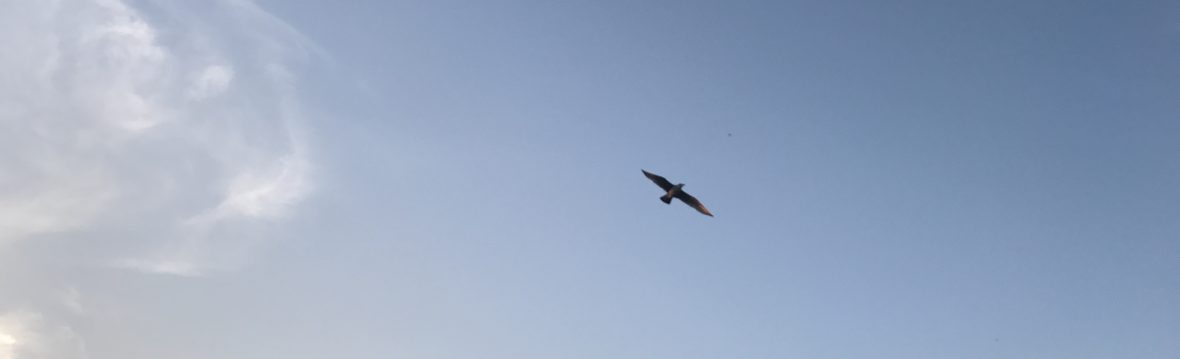
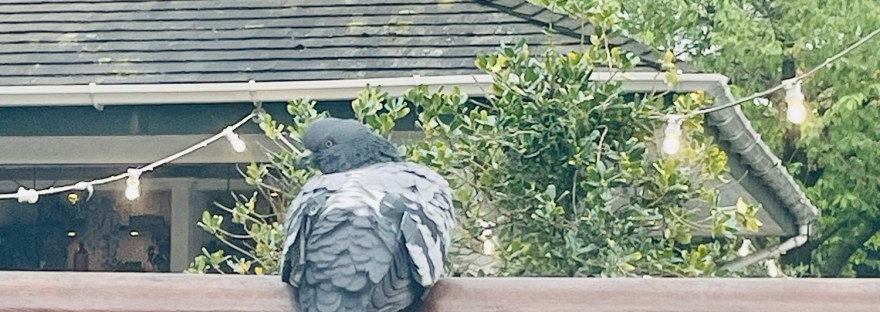
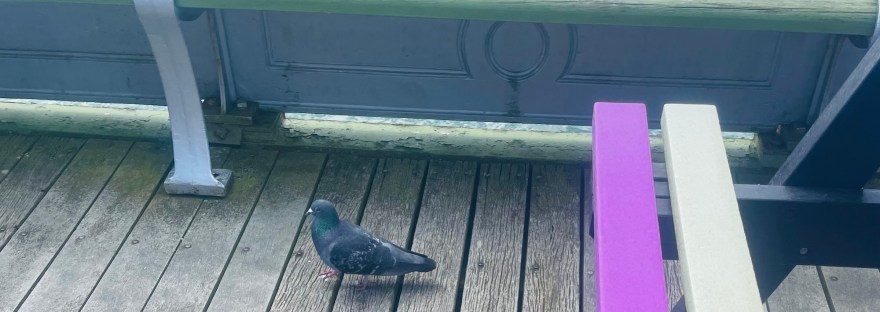
Anyway, a few seconds before the crow landed on the tree, a pigeon had just came back to her nest in a same tree.
Of course, I didn’t see her nest but I saw her slip into the branches and disappear, which makes perfect sense if she has a nest hidden there.
She was cute, looked happy and lively in the sunny day.
Just as I turned back to go into the house,
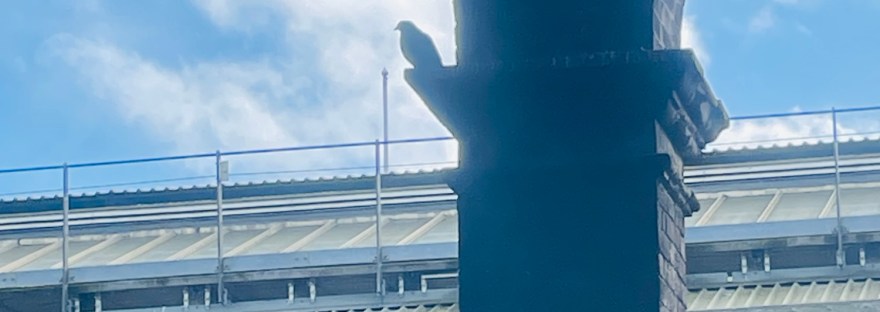
I heard the sudden flapping of wings and then that familiar, unpleasant sound of the crow.
I turned around and looked up,
and there was the pigeon flying away from her tyrant, whose claws gripped the highest branch as if he meant to dominate the whole landscape.
Surprisingly another pigeon came to the rescue, not to fight with the bully.
Pigeons aren’t cowards, thought.
They simply prioritise their safety and peace of mind.
So, it seems the second pigeon was checking on the nest before flying to support her friend on the other tree.
Then both pigeons flew away with the same quick rhythm and lightness under the blue sky.
The crow was still up there on the tree,
interest in nothing but the disturbance of peace of other creatures.
Soon, another senior crow, or perhaps one of those gigantic seagulls will chase him to the ground, I thought as I turned to go into the house wondering why crows are so mean.
How I wish I could have taken a photo of that scene.
Some people carry this ego that swells until it bursts.
Have you ever met anyone like that?
There’re plenty of them — especially on the news.
By the way, I borrowed the title from this old saying:
I not only thought I had struck gold, I also thought that I owned the mine.
Isn’t it so true?
After one success, some feel they are the best in the world.
After one massive profit, some believe they control the entire market.
After reaching the king’s throne, some imagine they will rule the whole world.
Nonsense.
The predecessors of this kind — with all their knowledge, wealth, and power — left the world not only empty-handed, but with a history marked by shame and disgrace.
People remember that kind for their evils, just as a reminder, a moral lesson, a path we’re warned not to follow.
Has your mother ever warned you not to listen to the whispers of the devils?
Haven’t you ever wondered how some people have excelled the devil in his own craft?
Actually, the devil himself would be so astonished by the high level those people reach that he might apply for early retirement before his eternal journey back home to hell.
By the way, the saying above doesn’t apply to these ego-swollen humans.
Here it is again;
I not only thought I had struck gold, I also thought that I owned the mine.
It applies to those with a nagging conscience — those ones who admit their mistakes and try not only to fix them but also to learn from them.
Though the devils know their mistakes; in fact, that’s what they live for and by, they neither fix them nor learn from them.
It feels like I haven’t posted in so long, though it’s only been a week or even less.
But when one gets busy, the mind can’t concentrate in too many things at once, can it?
By the way, this post isn’t about money.
They say creditors have better memories than debtors.
And of course, that makes perfect sense in the financial world.
The lender with the upper, steady hand would by all means save, register, and arrange all the details of the transaction.
On the other side, the borrower, with the lower, shakier hand, would delay, delete, or even freeze any memory of what’s owed or what should be paid back.
Right.
Now… do things work the same way in the non–financial sides of life?
In those close relationships — with family, friends, neighbours, and even those brief but meaningful acquaintances who pass through our days?
Would there still be creditors and debtors?
And if so, who would you think have a better memory?
Well… things happen, right?
But let’s stay on the positive side.
Love, kindness, forgiveness, and all the other beautiful traits we offer to those close, special ones — comes with no conditions, no deadlines for return, no legal action to take, and no double interest added for any delay.
So no— there are no creditors, no lenders in these relationships.
There are only the givers, with calm, warm hands,
who save a good memory with no alignment, no regret, and no remorse.
The receivers here are not borrowers with shaky hands.
No.
They are the blessed, the fortunate ones.
They can even hold a better memory than the givers, if only they honour kindness with gratitude.
Sometimes we just need to think positively.
even when the world seems to focus only on creditors and debtors.
So far, I am following the plan just fine—reading nonfiction.
Recently, I’ve started reading some psychology.
My first encounter with this subject was in my final year of high school, many years ago.
Honestly I remember nothing of those lessons except the teacher herself— even her name has slipped away. I remember her loud voice and sharp gaze, but I can’t get any closer to her name.
But I do remember the name of my teacher from my first year of primary school.
Strange, isn’t it.
I loved my first primary teacher and I wept buckets when she left and moved away with her husband.
Anyway, my psychology teacher crossed my mind as I stole a little time for reading. Time is tight these days, with Eid celebrations almost knocking on the door.
So… according to psychology, our memory machine is not only selective, but also clever and cruel. It doesn’t come with a button we can press to “save all” or “delete all.”
No.
It works professionally, by using its own unique selective strategy.
It mainly saves the things you like the most, hate the most, or the things that hold your full concentration and consciousness.
Memory is not like history, which keeps a record of everything, though sometimes with some alterations and even some big lies.
Memory is a trustworthy keeper. It writes the minutes of the things that truly matter in your life, even those small details, those passing emotions, or those quiet, special moments.
And sometimes, out of the blue, it brings back one of those memories from many years ago.
Something that can make you smile, cry, or simply wonder as time pulls you back in a split second.
You find yourself back in that classroom, learning psychology, having no idea that years later you would be reading a psychology book explaining why you can’t remember your teacher’s name.
Simply because you neither loved or hated her, your memory saved only what had caught your attention back then — the special tone of her voice and her sharp gaze
And… thanks to psychology, I found the little distraction that inspired me to write this post.
The most obvious choice is to keep going, to follow the crowd, repeat the same routine, and perhaps make the same mistakes, as long as things are not broken
But isn’t it a dangerous advice?
I heard its equivalent in Egypt. People say, “if it works, let it work.
Same meaning, right.
But what if it’s working badly or awkwardly or uselessly?
Yes, it’s working.
Yes, it’s usable.
And yes, it’s better than nothing.
But what’s wrong with fixing things that aren’t broken?
And first, do unbroken things really need any fixing?
Well… that depends on how you see things.
Fixing can mean replacing, discarding, or abandoning a thing or an idea or even a person.
But it can also mean rethinking, reshaping and reliving.
It can be an invitation to make some changes, some improvements to whatever we’re having or doing.
Imagine you have an old china cup with a few scratches, crakes, and maybe a broken handle.
You use it every day.
You drink your hot tea from it.
You wash it.
You dry it.
And you put it back in the cupboard safe and sound.
You keep it this way until its time comes when it either bursts or slips from your hands and smashs against the floor.
Some will throw it away.
Some will try to fix it by gluing its pieces back together.
In either cases, it will no longer be used for drinking or washing.
It becomes either a souvenir or goes straight into the bin.
So why couldn’t it become a souvenir a long time ago?
Because it wasn’t broken.
And what’s wrong with fixing it while it was still usable with giving it new ideas, new benefits, or even new memories?
Sometimes, we don’t just practise this easy-peasy strategy, but we believe in it.
If it works, let it work.
If it isn’t broken, don’t fix it.
Until it’s too late.
Until we finally realise that everything has its time…
This let’s pretend is all about close your eyes and dream.
Well… not closing your eyes and dozing off, but turning on the light to imagination, to hope, and perhaps even to happiness.
Children are the best at make- believe.
They use let’s pretend to dream about the future, about their growing-up lives.
They play this let’s pretend game to have fun.
They cling to this let’s pretend as a shield to avoid and escape punishment.
Writers make-believe too.
Their let’s pretend characters become full of life on the page.
Their let’s pretend thoughts turn into words a reader can hold.
And their let’s pretend world becomes real in imagination.
Pause…
This was how I began this post last night with this idea which I borrowed from a non-fiction book about creativity and IQ tests. By the way, do we really need all the fuss around them?
I don’t think so.
Now, back to the main idea.
Instead of going back to finish my post, I decided to complete Dostoevsky’s Poor People.
I did finish it, but that wasn’t a good idea.
Because I abandoned the post and slipped straight into reviewing the book.
But the idea of let’s pretend started nagging me, buzzing into my head, with a single plea;
Please let’s pretend you didn’t read the book.
Please finish the post.
I tried.
But, I couldn’t.
The book seemed to cut the flow of my post thoughts with its hopeless narrative.
It’s understandable how the story reflected the miserable and hard life the author experienced during the time he was writing it.
But still, I found myself wondering; why he didn’t play this let’s pretend game, just once, to make- believe some hope in the miserable story?
By comfort, I don’t mean idleness, an aimless life, or monotony.
By comfort, I mean choosing to follow what’s suitable for you while still having a target, a purpose, and even a moral compass.
The gardener, for example, who knows nothing but planting and selling flowers, is happy, content, and proud of his accomplishments.
Then one day, others introduce this idea of “comfort zone” into his mind.
They keep nagging him to get out of his comfort zone and take some risks:
to buy more land, plant exotic scentless flowers, and double or even triple the price of his harvest.
He says, “But my life is good, and I have risks everyday to take and challenge.”
They say, “But you can do more.”
He says, “I have enough.”
They say, “Who dares, win.”
He says, “win what? “
They say, “Fortune, wealth, and more pleasures.”
He says, “What about comfort?”
They say, “Well… they will bring comfort.”
He says, “No… there will be no time for comfort.”
They say, “You’re wasting your life.”
He says, “No, no… I’m enjoying my life.”
Is the gardener lazy or weak or brainless?
Do the others, with their idea of “getting out of the comfort zone,”live really in paradise?
Strange how most people ignore the fact that, in comfort, a person can be more productive, creative, and successful.
A comfort zone is not about sitting in a chair and crossing your legs.
A comfort zone can be full of options, challenges, and achievements.
It’s simply where and how you choose to live.
In the end, in your comfort zone, you have the freedom to follow your own intuition, and you are not obliged to say “Amen” to anyone’s else rules because… it’s a home, not a prison.
In case you, just like me, are shocked and disappointed by what’s happening around the world, here are some of my philosophical musings, not on politics, but on gambling.
Now… before making any assumptions, this post is inspired by Dostoevsky’s The Gambler which I’ve finished reading.
You know what?
A popular Arabic saying goes: Take the wisdom from the mouths of the insane.
You may wonder how.
Wisdom and insanity do not match, together they make no sense.
You’re right.
But… who says that the insane are wise, or that wisdom can be taught to the insane?
It’s not about knowledge or experience.
It’s about special gifts.
It’s an advice not to belittle anyone’s abilities, even if they were insane.
Back to the Gambler: the book was clearly written by a gambler with a warning as bright as sunlight in a clear sky. It seems to shout: avoid gambling, never try it, and flee from it.
Isn’t the gambler just another insane person born with a functioning brain, yet destroying it for the sake of gambling obsession?
The story echoes that old saying, with a bit of alteration.
It seems to urge readers; take the wisdom, and learn the lesson from the gambler’s tale.









 Pure and Simple